
Clothes ...
but no cigar

The Snarky Editor will be the first to admit that she’s a fan of the really awful pun, so her first order of business today is to beg forgiveness for the title. She really couldn’t resist, though, when creating a column about personal apparel.
The phrase of course should be “Close, but no cigar” — which harks back to the days when carnival prizes often included smokes or drinks instead of cuddly plush animals. Now it’s come to refer to any attempt that almost — but not quite — succeeds.
And that makes “Close, but no cigar” very much on target in examples like these.
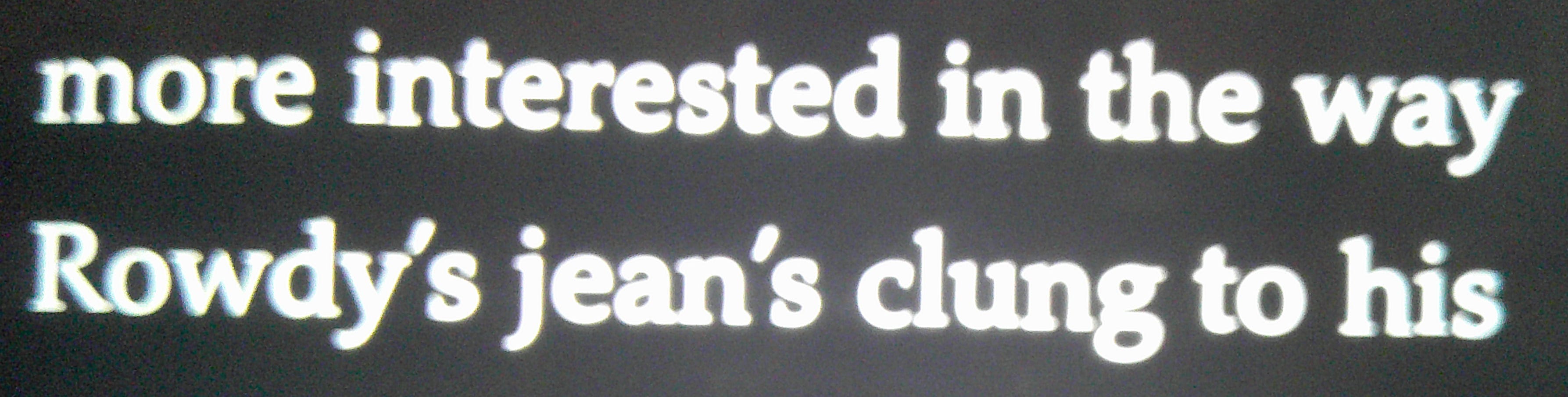
…more interested in the way Rowdy’s jean’s clung to his…
Well, the Snarky Editor has to admit to some interest in exactly what the jeans are clinging to, but the point here is that Rowdy’s jeans don’t need an apostrophe. They don’t own anything, and even if they did, we’d need to use the plural form — his jeans’ buttons.

She wore a purple blouse with navy green khakis and pink boots.
Aside from the questionable taste — is this woman trying to emulate a rainbow? — the Snarky Editor wonders if the author is colorblind. Because the last time she checked, the color was navy blue, not navy green. And as long as we’re talking about technicalities, khaki is actually a color — a dusty-looking mix of tan, brown, and gray. In the modern world, however, the word has come to be attached to the heavy cotton twill fabric that khaki pants are made from, so the author gets a pass on that one.
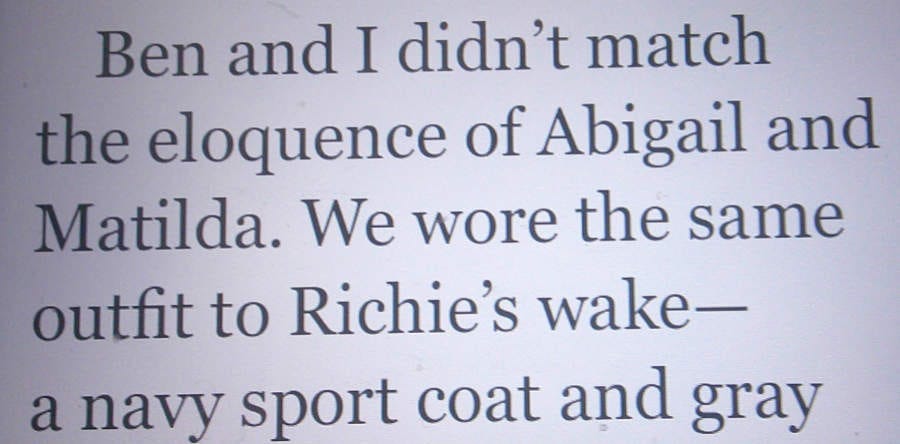
Ben and I didn’t match the eloquence of Abigail and Matilda. We wore the same outfit to Richie’s wake — a navy sport coat and gray [trousers].
This narrator is right about one thing. Abigail and Matilda are more eloquent — more well-spoken — because the narrator clearly doesn’t know the difference between eloquent and elegant. He and Ben didn’t match the elegance of the way the women were dressed. And as for Ben and the narrator wearing the same outfit to Richie’s wake — how did both guys fit into a single sports coat and pair of trousers? Didn’t it make walking difficult? We wore the same outfit — navy sports coats and gray trousers….
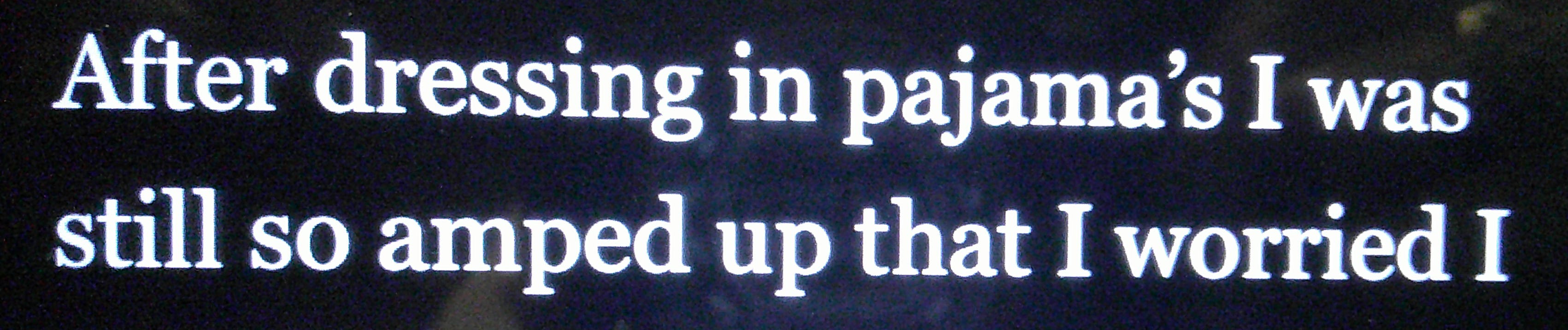
After dressing in pajama’s I was still so amped up….
Sigh. Repeat after The Snarky Editor: Just because a word ends in an S doesn’t mean it needs to have an apostrophe tossed in. The narrator dressed in pajamas. Period.
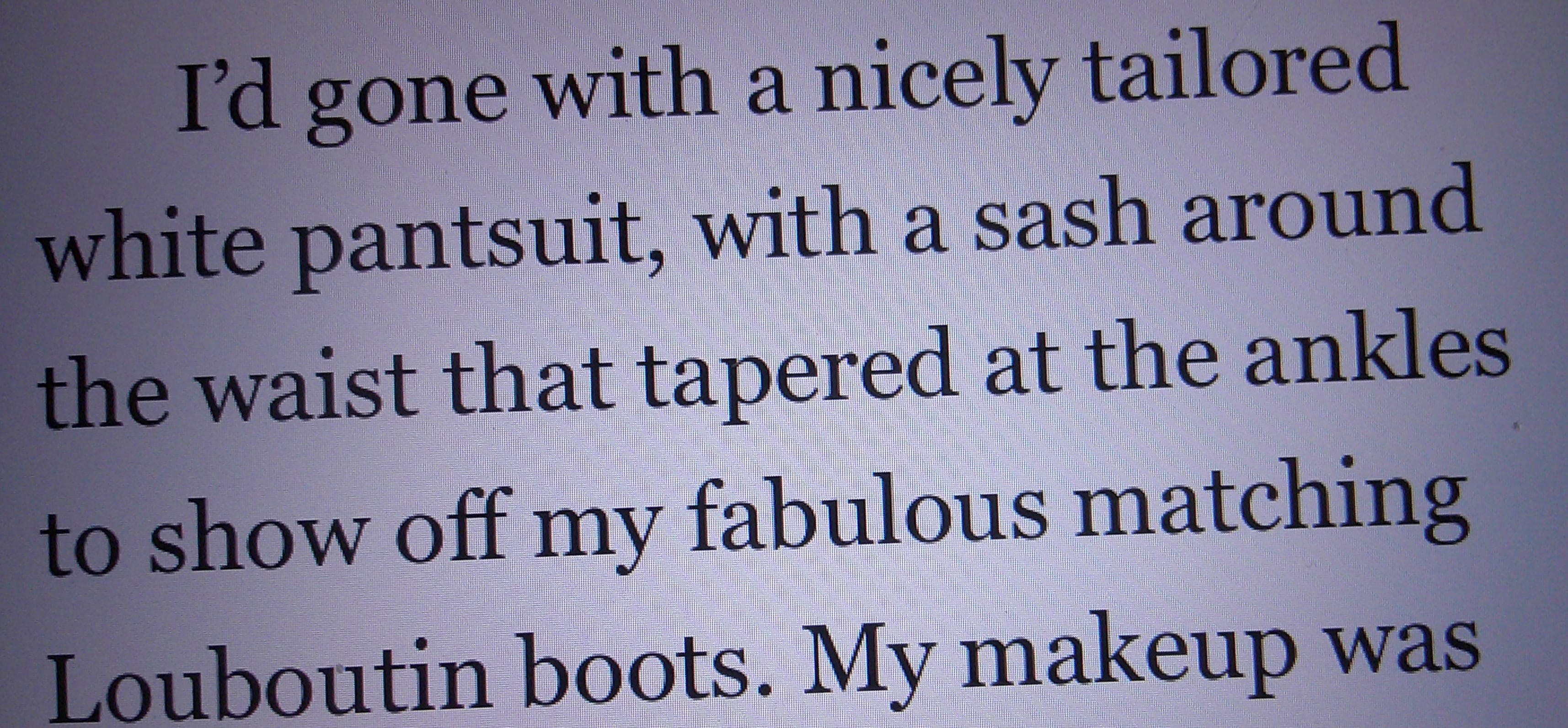
I’d gone with a nicely tailored white pantsuit, with a sash around the waist that tapered at the ankles to show off my fabulous matching Louboutin boots.
The Snarky Editor has a bit of trouble visualizing a sash that goes all the way to the ankles, tapering as it descends. Oh, wait, the author must have meant that the legs of the pantsuit tapered — but that’s not what this sentence says.
The author gets extra credit, though, for spelling Louboutin correctly — and with the required capitalization.
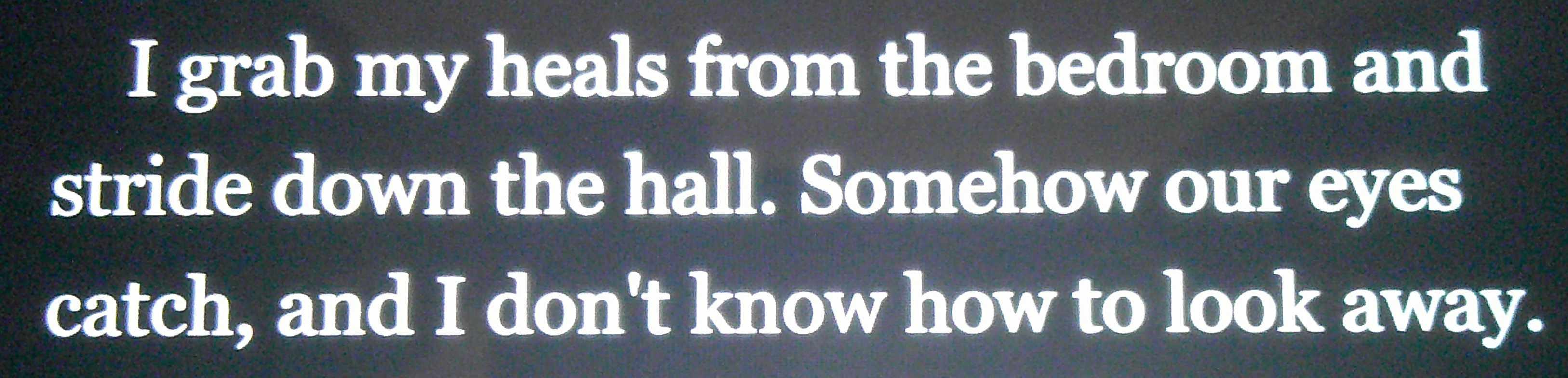
I grab my heals from the bedroom…
Pretty sure this character isn’t wearing Louboutins, but the fact is, she’s also not wearing heals, she’s wearing heels. As in a shoe that elevates the part of the foot that’s called a heel. How tough is that to figure out, really?
The Snarky Editor comes out of hiding occasionally to comment on the awkward, silly, and sometimes hilarious editing errors found in published books.
#snarkyeditor #everybodyneedsaneditor
Leigh Michaels is the award-winning author of more than 100 books, including historical and contemporary romance, non-fiction books about writing, and local history. More than 35 million copies of her books are in print in 27 languages and more than 120 countries. She is also a writing coach and book editor, though she promises to be snarky only in regard to published books.
To find out more, check out https://leighmichaels.com
Thanks for another great post. This week, I've been reading a mystery that I was really enjoying until I starting noticing dozens of typos and grammatical errors, dropped "the's" on almost every page... It was quite off-putting. The Snarky Editor would've found a couple years' worth of material in this one novel! Here are a couple of examples: " Mac's swallowed, speechless"...The character is Mac. "They're also some water purification tablets..." Instead of "there are". "The waiter "bought" menus..." I wonder if this is more common in contemporary novels with all the digital automation, etc.?